Mercury Planet Coloring Page
Mercury Planet Coloring Page
Hello, little space explorers and creative artists! Are you ready for an exciting journey across the solar system without ever leaving your art table? Space has always captured the big imaginations of children, from glowing stars to giant swirling gas planets. Among all the fascinating celestial bodies in our cosmic neighborhood, the planet closest to our blazing sun holds many secrets waiting to be discovered.
That is why coloring activities centered around our planetary neighbors are such a fantastic way to blend art with science. By filling in the details of our rocky little cosmic neighbor, children can bring the wonders of astronomy right into their hands. Grab your favorite crayons, markers, or colored pencils because we are about to dive into everything you need to know about a Mercury Planet Coloring Page!
What This Coloring Page Features
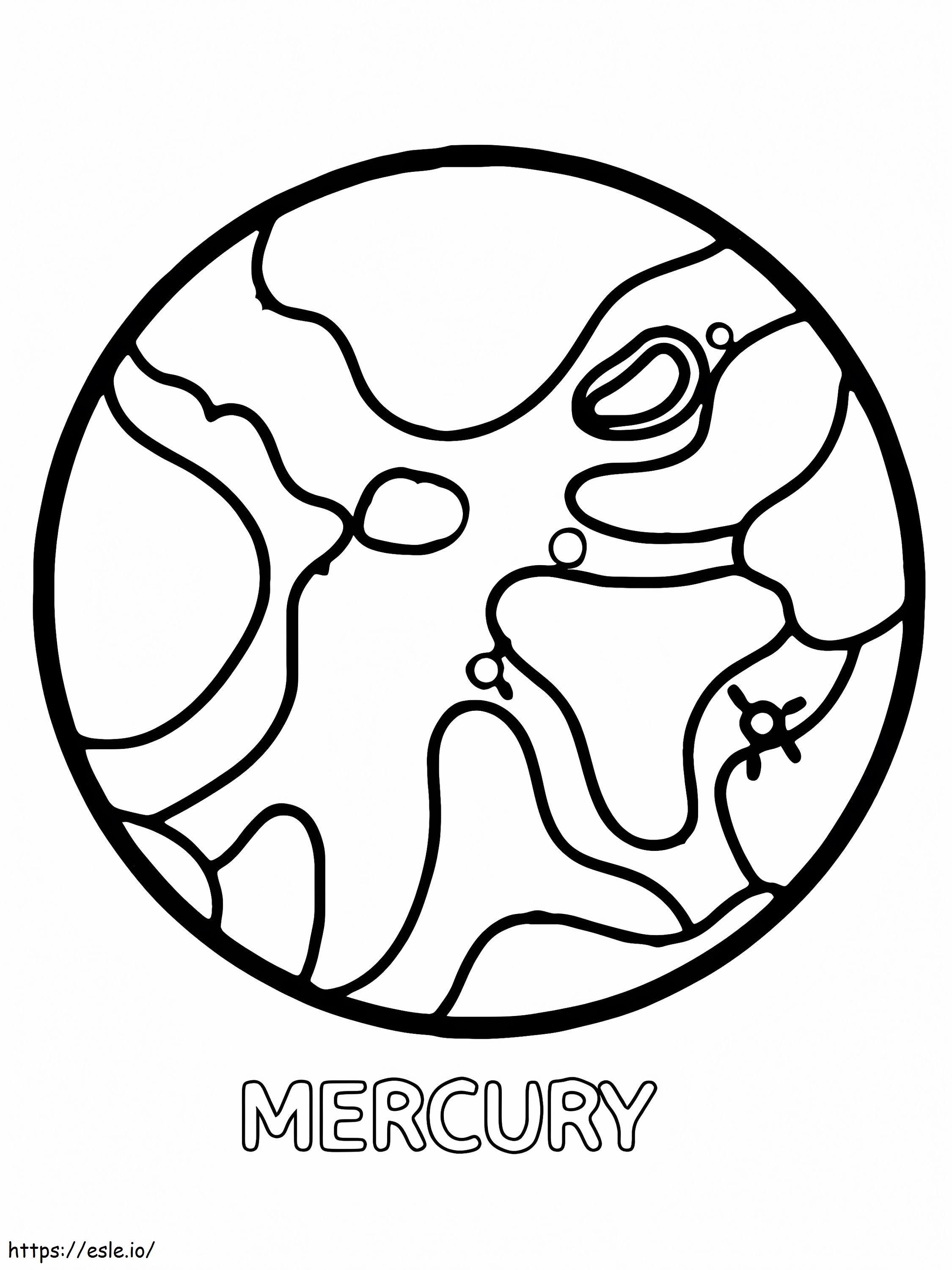
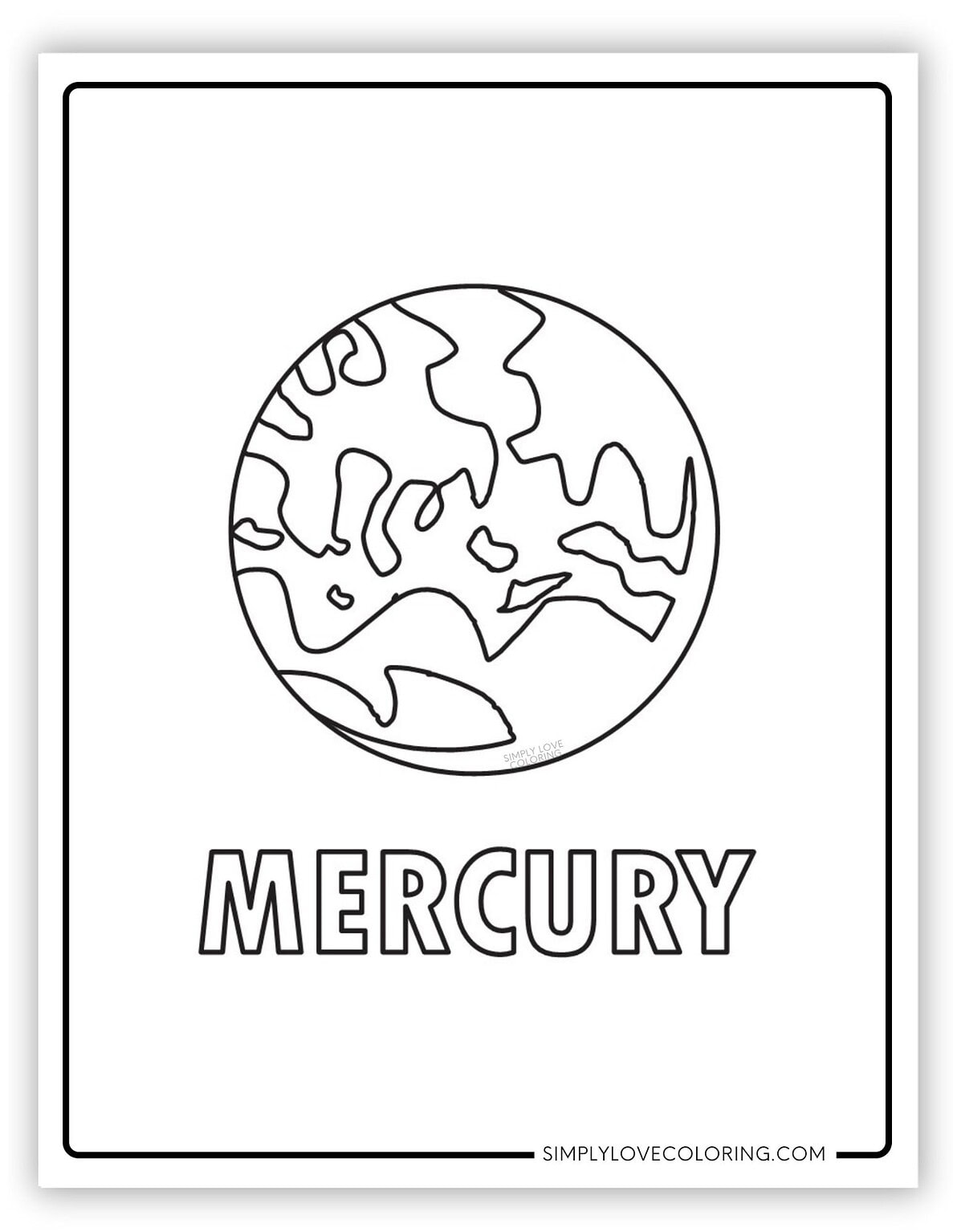
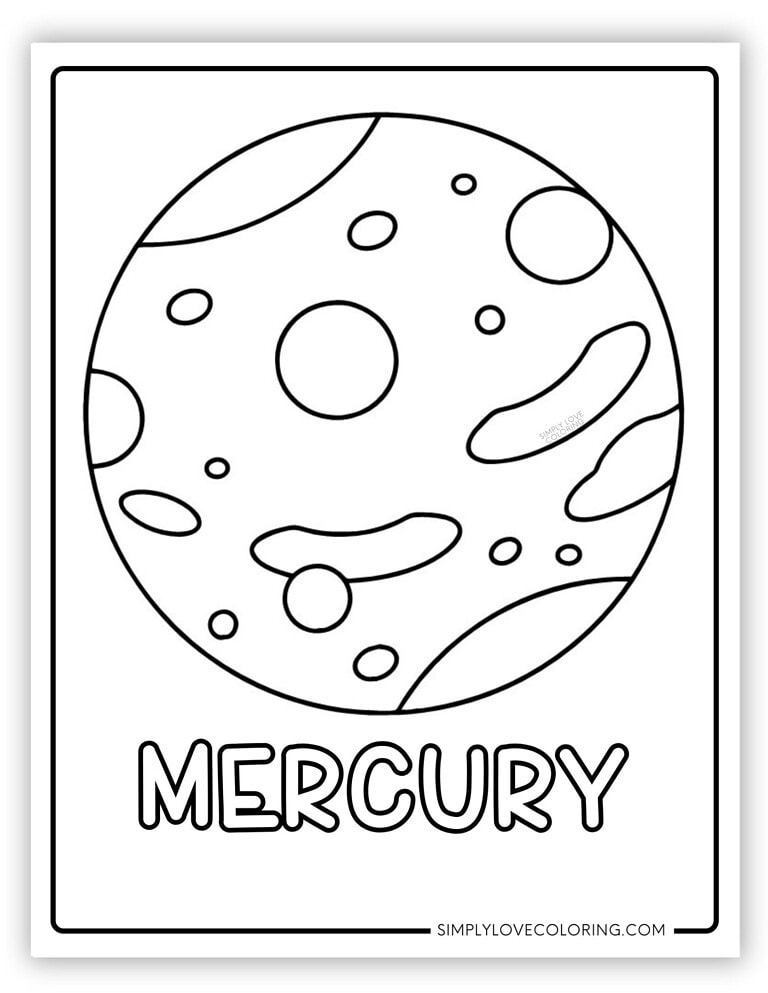
Our specially designed Mercury Planet Coloring Page brings the smallest planet in our solar system to life in a fun, kid-friendly way. When children look closely at the sheet, they will notice several scientifically inspired details that make learning about space both interactive and visually engaging.
Key Visual Elements
The main attraction of the printable sheet is, of course, the planet itself. It is depicted as a round, textured sphere that mirrors the real appearance of this rocky world. Unlike gas giants like Jupiter, this inner planet has a solid, cratered surface just like Earth’s moon.
Children will see lots of bumpy craters of different shapes and sizes scattered across the globe. These craters were formed millions of years ago when space rocks and comets crashed into the surface. The page also features a friendly background filled with twinkling stars, distant galaxies, and sometimes a smiling sun peeking from the corner to remind us just how close this little planet orbits to our solar system’s star.
Benefits of This Coloring Activity
Coloring is much more than just a quiet afternoon pastime; it is a powerful tool for early childhood development. When kids sit down with a space-themed coloring sheet, they are actually building crucial foundational skills.
First, filling in the tiny craters and surrounding stars helps develop fine motor skills and hand-eye coordination. Children must carefully control their coloring utensils to stay inside the lines, which strengthens the small muscles in their fingers and hands.
Second, this activity sparks natural curiosity about science and astronomy. As children color, they often start asking questions: Why is it so hot? Why are there so many holes on the surface? This opens the door for parents and educators to introduce basic space facts in a relaxed, conversational manner.
How to Use This Coloring Page
Getting started with your Mercury Planet Coloring Page is as easy as downloading, printing, and creating! This versatile activity can be adapted for many different settings, whether you are in a bustling classroom or enjoying a rainy afternoon at home.
To begin, simply print out the sheet on standard white printer paper or slightly thicker cardstock if you plan on using wet mediums like watercolors or markers. Before letting the creativity flow, take a minute to talk about the planet. You can share fun facts, such as how it takes the shortest trip around the sun or how it experiences extreme temperatures ranging from freezing cold to scorching hot.
Encourage children to experiment with different colors. While the actual planet is mostly shades of gray, brown, and dark charcoal, space art is all about imagination. Who says a cosmic world cannot have purple craters or a neon blue sky?
Tips for Parents and Teachers
- Provide a variety of coloring tools like metallic markers, crayons, and pastels to give the rocky surface a textured look.
- Pair the coloring activity with a fun picture book about the solar system or an animated space video.
- Hang the finished artwork on a refrigerator or classroom bulletin board to create a DIY solar system gallery wall.
- Use glitter glue or star stickers to add extra sparkle to the surrounding space background.
- Ask the child to make up a creative story about an astronaut visiting this cratered world.
Age Recommendations
This educational coloring sheet is wonderfully adaptable for a wide range of age groups. Toddlers and preschoolers will love the bold outlines and simple circular shapes, which make it easy for little hands to practice coloring inside the boundaries.
For older children in early elementary school, the page offers a chance to focus on shading, blending, and adding realistic textures to represent the rugged landscape. It serves as a fantastic companion piece for elementary school science units focusing on astronomy, day and night cycles, or the layout of our solar system.
Frequently Asked Questions
What colors should be used on a Mercury planet coloring page?
In real life, the planet has a rocky, dusty surface made up of shades of gray, dark brown, and charcoal. However, creative freedom is always encouraged in children’s art, so kids are welcome to use any vibrant colors they like!
Is this coloring page suitable for toddlers?
Yes! The bold, clear outlines make it very easy for toddlers and preschoolers to color without getting frustrated, helping them build early motor skills while having fun.
Can teachers use this printout in a classroom setting?
Absolutely. Teachers frequently use space-themed coloring sheets during astronomy lessons, science centers, or quiet time activities to reinforce learning about our solar system.
Explore More Free Printable Coloring Pages
Did your little space enthusiast have a blast exploring the smallest planet in our solar system? The cosmic adventure does not have to stop here! There is a whole universe of free printable coloring pages waiting to be discovered. You can travel onward to the bright red dust storms of Mars, swirl through the magnificent rings of Saturn, or cruise past the glowing blue clouds of Neptune.
Be sure to check out our complete collection of solar system printables, animal habitats, historical figures, and nature scenes. Keep those crayons sharp, keep asking big questions, and happy coloring, creative explorers!
Images References